

Reviewed · CORFU OLD TOWN WALKS & HISTORY
Small-group Corfu Town Historical Walking Tour
Corfu Town history is all around you. This guided walk threads Venetian, British, and older layers into one logical route, starting at the Old Fortress and ending back where you began. I like that it’s built for real conversation with a small group and that you cover key sights in just about three hours, not a half-day marathon.
What I really love is the pacing and guide attention. With guides like Electra, Ariti, Nausica, and Debbie, the vibe is personal, not lecture-mode, and the walk stays easy to follow even when the streets tighten up. I also like that you get both grand landmarks and the everyday places people actually use, like Spianada Square and the café strip around Liston.
One thing to consider: this is still a walking tour. You’ll be on your feet for the whole 3 hours, and in hot months your comfort will depend on how well your guide manages shade and breaks.
In This Review
- Key highlights worth planning around
- From the Old Fortress to the Old Town: how the route makes sense
- Meeting point and the small-group rhythm that keeps things fun
- Old Fortress Corfu: your first stop for real views and history
- Spianada Square and Liston: the most useful 20-minute break
- The Palace of St. Michael and St. George: where British rule left art behind
- Church of Saint Spyridon: Venetian architecture and a very local kind of faith
- Old Town Hall of Corfu (San Giacomo Theatre): layers of civic life
- The Jewish quarter (Evraiki): a walk through memory and scars
- Morning vs evening departure: choosing the right light and pace
- Price and value: why $95.86 can be fair here
- What the guide brings (and why it shows up in the reviews)
- Is this the right tour for you?
- Should you book the Small-group Corfu Town Historical Walking Tour?
- FAQ
- How long is the Corfu Town Historical Walking Tour?
- Where does the tour start and end?
- What sights are included during the walk?
- Is the Old Fortress ticket included?
- Are any other entries included or free?
- Does the tour run in English?
- How large is the group?
- Is it easy to get to the meeting point?
- Is free cancellation available?
Key highlights worth planning around
- UNESCO-listed Corfu Town center with a guide who ties the layers together
- Old Fortress entry ticket included so you’re not stuck outside
- Agios Spyridon’s church with its Venetian-style architecture and relic crypt
- Spianada Square + Liston for a quick reset in the main public space
- Palace of St. Michael and Saint George and the Corfu Museum of Asian Arts (you’ll learn why it matters)
- A small group cap (listed as limited to eight, with a maximum of 10) for better questions
From the Old Fortress to the Old Town: how the route makes sense
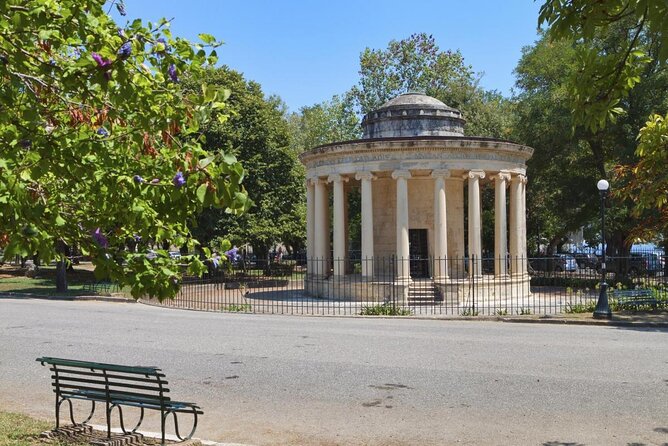
This tour is the rare kind that starts where your bearings actually are. You meet near the Old Fortress area, and the walk then flows into Corfu Town’s historic core instead of zig-zagging randomly through side streets.
The big win here is how the sights connect. You don’t just see buildings. You learn why Corfu has Venetian fingerprints, why the British period left its own signature, and how local life still runs through these squares and churches. That context makes the streets feel less like a photo backdrop and more like a living place.
Also, the format is flexible in a practical way. There are morning and evening departure options, so you can pick what fits your day in Corfu rather than forcing the tour to fit your itinerary.
Rather wander the alleys? More Corfu old-town walks
- Corfu Town: Guided Walking Tour and Local Food Tastings
★ 4.9 · 313 reviews - Best Corfu Tour with Boat Trip & Old Town for Cruise Passengers
★ 4.5 · 107 reviews - Corfu Old Town Guide Tour with Dog or City with 4 paws
★ 4.5 · 85 reviews - Taste Corfu: Private Corfu Food Walking Tour
★ 5.0 · 82 reviews - Corfu: Gastronomy Walking Tour
★ 4.9 · 78 reviews
Meeting point and the small-group rhythm that keeps things fun
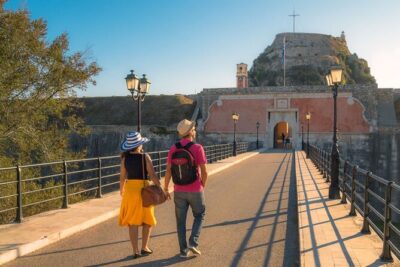
You’ll start at Agoniston Politechniou, Kerkira 491 00, Greece, and the tour ends back at the meeting point. Your guide meets you in front of the Old Fortress at the statue of Schulemburg, then you enter together.
That detail matters. Old Town can feel like it runs in circles, especially on your first evening. A clear meet-and-enter point helps you avoid the awkward moment of trying to figure out where the group is while everyone else is already inside.
Group size is kept small. The tour is described as limited to eight, and it’s also listed with a maximum of 10 travelers. Either way, you’re unlikely to be stuck waiting for the guide to find your question in a crowd. In reviews, I saw repeated praise for guide interaction, including guides who check in on what pace works for the group.
Old Fortress Corfu: your first stop for real views and history
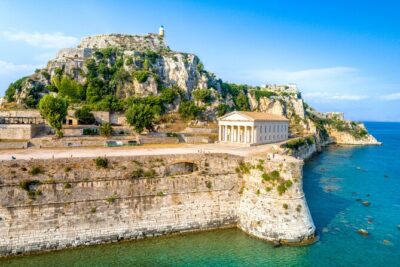
Your first hour is centered on the Old Fortress of Corfu. Because the admission ticket is included, you don’t have to manage separate entry or scramble for a plan once you arrive.
Inside, your guide sets the stage: how this fortress relates to the island’s defenses, and how it shaped the city that grew around it. Even if you’re not a hardcore fortress person, this is a smart opening. You get the defensive “why” first, then the rest of the walk makes more sense.
Practical tip: wear shoes you can stand in for a while. Even a short climb or uneven ground can add up when you’re doing multiple Old Town stops in one go.
Spianada Square and Liston: the most useful 20-minute break
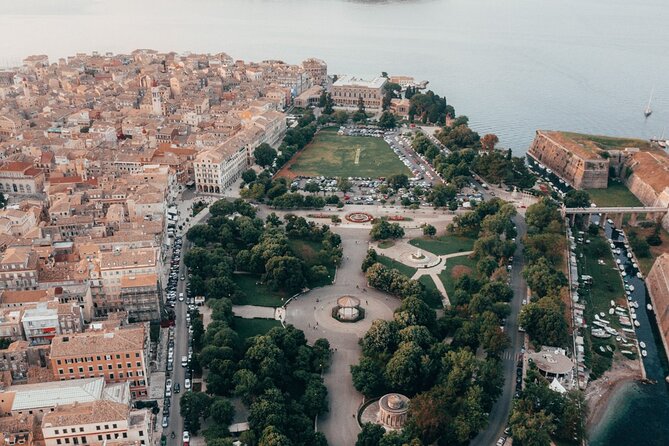
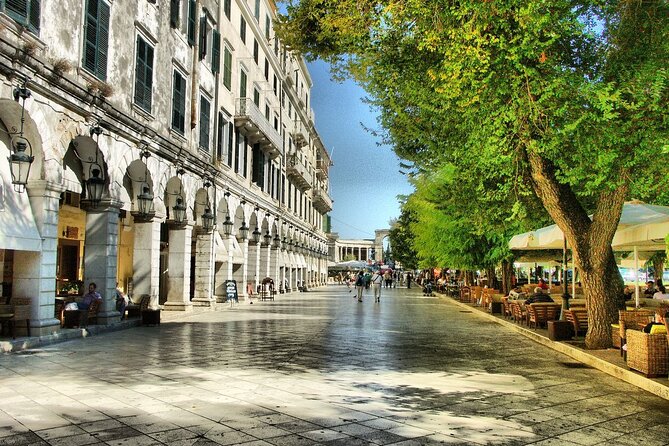
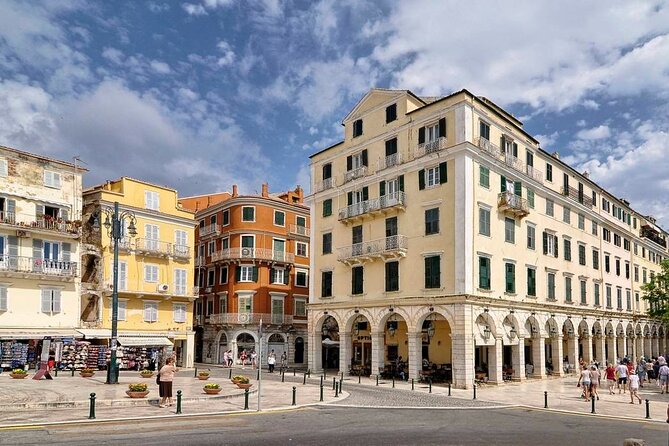
Spianada Square is the big central stage of Corfu Town. It’s tied to the Venetian idea of an open flat area, and it’s often noted as one of the largest squares in the Balkans. You also pass Liston, the covered arcade area where you’ll find many of the cafés and restaurants.
What I like about this stop is that it’s not just scenery. It’s a logical reset. After the fortress, you’re shifting from defensive walls into the social heart of the city. Even a brief stop here helps you start recognizing the “flow” of Old Town: where people gather, where they sit, and how daily life organizes itself.
If you’re planning photos, this is your easiest win. You’re in the main public space, so your angles are simple and the context is obvious.
The Palace of St. Michael and St. George: where British rule left art behind
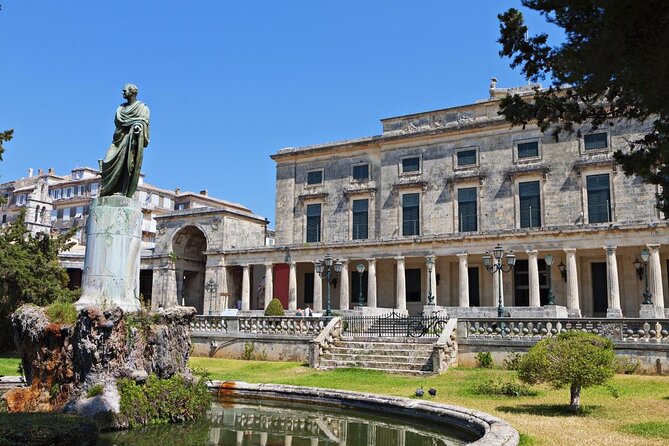
One of the more interesting turns on the walk is the Palace of St. Michael and Saint George. This is on the northern part of the historical center square, and it’s described as the largest and most significant building from the English rule period, which ran from 1814 to 1864.
Here’s why it’s worth paying attention: it wasn’t built as a generic landmark. It was requested for the Lord High Commissioner, Sir Thomas Maitland, and it served as both a luxurious residence and the administrative headquarters.
Today, the palace houses the Corfu Museum of Asian Arts. This museum is noted as the only one of its kind in Greece, focused on art and antiquities from the Far East and India. It was founded in 1928, and its collection is said to include roughly 15,000 works, with rare items appearing in international exhibitions.
Even if you don’t go deep into a museum setting, your guide should help you see the “why” behind the building’s presence in Corfu Town: power, administration, and then a shift into public culture. That story adds another layer to your walk.
A few more Corfu outings we would happily point a friend towards


Church of Saint Spyridon: Venetian architecture and a very local kind of faith
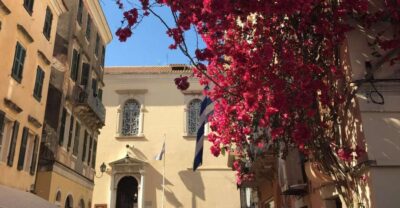
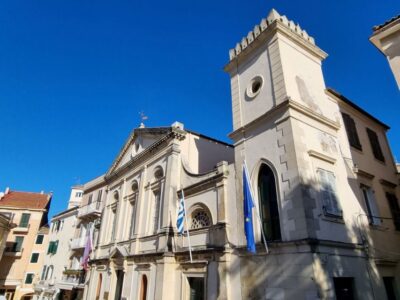
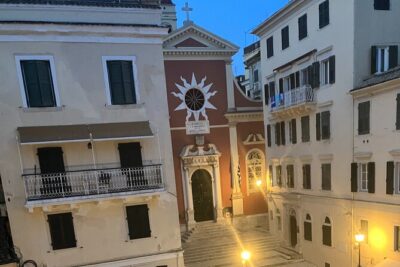
Next comes the Church of Saint Spyridon, the island’s patron saint and described as a miracle worker. The church dates to the 16th century, and its architecture follows Venetian-style patterns. A key visual clue is the bell tower, which is stated to be the highest spot in town and visible across Old Town.
Inside, there’s also a crypt where the relics are kept, described as housed in a double sarcophagus.
What makes this stop feel different from a typical “look at the building” stop is the local meaning. Corfu’s relationship with Agios Spyridon isn’t treated like a museum label. It’s presented as ongoing belief, which helps you understand why this church sits at the center of so many local lives and stories.
Practical note: churches can be cool compared with the street. If it’s hot outside, you may appreciate that small temperature shift.
Old Town Hall of Corfu (San Giacomo Theatre): layers of civic life
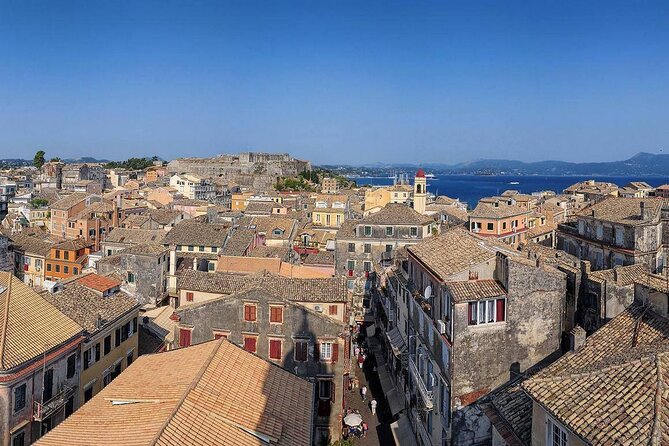
As you walk among Corfu’s narrow streets, you pass the Old Town Hall area and the Town Hall Square. This was once the exclusive Venetian neighborhood, with the opera house and villas around it.
You’ll also hear the building’s story change hands over time. It first operated as a club for noblemen. In 1720, it hosted the Noble Theatre of Saint Giacomo of Corfu. Then in 1903, it became the town hall.
I like this kind of stop because it shows how cities reuse space instead of discarding it. When you connect the dots between theater and administration, the architecture starts to feel like a timeline, not a single snapshot.
It’s also a good moment to slow down. You’ve covered fortress, square, palace, and church. This is the “city functions too” reminder.
The Jewish quarter (Evraiki): a walk through memory and scars
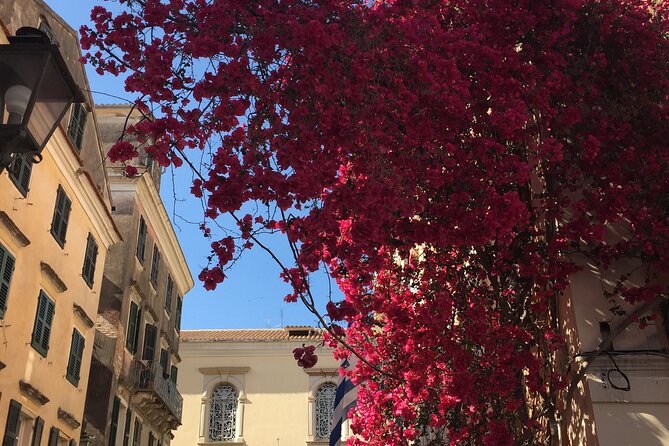
The last part of the route includes the Jewish quarter, still called Evraiki in Greek. It’s described as the old Venetian ghetto area in the southeast section of the city near the Venetian fortifications.
The neighborhood is noted for its alleyways lined with faded, multistoried houses, similar to the street feel you get in Venice. Then the story turns toward loss: it lost its urban unity due to bombardments during World War II.
This is the emotional weight of the tour. It’s not a sightseeing detour. The point is to understand how different eras shaped this district, and how conflict changed the built environment.
If you’re the type who likes walking with your eyes open, this final walk segment sticks. You’ll finish with a better sense of why Old Town looks the way it does, and why history is not evenly distributed across the streets.
Morning vs evening departure: choosing the right light and pace
You can choose morning or evening departures. The tour runs for about 3 hours, so your choice mainly affects comfort and atmosphere.
Morning tends to work well if you want calmer streets and lower heat. Evening can be nicer if you like the city settling into night life and if you’re finishing the tour before dinner plans.
Either way, pay attention to what your guide does with shade. Reviews mention guides making a real effort to keep the group in shade during hot weather, with guides like Electra highlighted for managing comfort in July. That matters more than people think, especially on a walk that stays active the whole time.
Price and value: why $95.86 can be fair here
At $95.86 per person for about 3 hours, this isn’t the cheapest way to see Corfu Town. But the value comes from what’s included and how the time is used.
Here’s what you’re paying for, in plain terms:
- A live guide for roughly 3 hours, with a small group size
- Old Fortress admission included (so you’re buying access as part of the experience)
- Stops that actually matter together: fortress, squares, church, palace context, and the Jewish quarter
If you only care about taking photos and moving at your own pace, you could cobble together a self-guided route. But if you want the “why” behind Venetian and British touches, plus the local context around Agios Spyridon, you’ll get more out of this format.
Also, the guides get strong feedback for personality and interaction. In reviews, people praised the guide’s warmth, humor, and ability to answer questions, plus even help with things like lunch or a coffee stop along the way.
A good way to judge it: if you’re the type who reads plaques only halfway, this tour is for you. It turns those plaques into stories you can remember.
What the guide brings (and why it shows up in the reviews)
I noticed a pattern in the praise: the guides are described as warm, personable, and able to explain history in a way that feels usable during your walk.
Names that come up in positive feedback include:
- Electra, praised for local insight and keeping the group comfortable in heat
- Ariti, praised for being informative and easy to talk to, with good balance of history and modern life
- Nausica, praised for personality and for pairing the tour with practical recommendations like food
- Alkistis (Alice) and Debbie, praised for professionalism, pacing, and clear explanations
That matters because a walking tour can go two ways. It can turn into a march of facts. Or it can become a conversation where you ask why a place looks like it does. This tour aims for the second one, and the guide style is part of the value.
Is this the right tour for you?
This walk is best if you want:
- A guided introduction to Corfu Town’s UNESCO historic center
- A route that mixes major landmarks with the everyday squares and lanes
- Small-group attention, not a noisy crowd
It might be less ideal if:
- You want zero walking and minimal time on your feet
- You prefer museum-only experiences over street-level context
- You’re traveling with people who tune out during historical explanations (the tour is heavy on story and context)
If you’re in Corfu for a short visit, this can also be a strong starting day because it gives you the city’s logic early. Some people even recommend pairing it with a follow-up like a trip to Kanoni afterward, if you have the time.
Should you book the Small-group Corfu Town Historical Walking Tour?
I’d book it if you want Corfu Town to make sense quickly. The route hits the big anchors you’ll see again and again in photos and postcards, but the real payoff is the connections between fortifications, Venetian architecture, British-era influence, and the lived reality of neighborhoods like Evraiki.
If you’re comfortable walking for about 3 hours and you like asking questions, the small-group size should make it feel personal. And if you’re worried it’s too pricey, remember that Old Fortress admission is included and you’re buying time with a guide who can explain what you’re looking at.
If you want, tell me what month you’re going and whether you prefer morning or evening, and I’ll suggest a simple plan for what to do before and after your 3-hour walk.
FAQ
How long is the Corfu Town Historical Walking Tour?
It lasts about 3 hours.
Where does the tour start and end?
It starts at Agoniston Politechniou, Kerkira 491 00, Greece, and ends back at the same meeting point.
What sights are included during the walk?
You’ll visit the Old Fortress of Corfu, Spianada Square (with Liston), the area around the Palace of St. Michael and Saint George, the Church of Saint Spyridon, the Old Town Hall area (San Giacomo Theatre), and the Jewish quarter (Evraiki).
Is the Old Fortress ticket included?
Yes. Admission for the Old Fortress is included.
Are any other entries included or free?
The stops for Spianada Square, the Church of Saint Spyridon, and the Town Hall area are listed as free.
Does the tour run in English?
Yes, it’s offered in English.
How large is the group?
It’s described as a small group with a maximum of 10 travelers, and it is also listed as limited to eight.
Is it easy to get to the meeting point?
The meeting point is near public transportation, and service animals are allowed.
Is free cancellation available?
Yes. You can cancel up to 24 hours in advance for a full refund.
The Corfu Backstory
- Small-Group Food and Cultural Tour in Corfu
★ 5.0 · 299 reviews - Corfu: History and Culture Walking Tour
★ 4.9 · 55 reviews - Corfu: Historic Buildings and Great Personalities Tour
★ 4.8 · 24 reviews - Tour in Corfu Town: Historic Buildings & Great Personalities
★ 5.0 · 24 reviews - Corfu Town express tour: 90 minutes of History, Culture and Charm
★ 5.0 · 24 reviews
More Tour Reviews in Corfu
- From Corfu Island: Antipaxos & Paxos Blue Caves Boat Cruise
★ 4.6 · 2,963 reviews - From Corfu: Day Cruise to Paxos, Antipaxos, and Blue Caves
★ 4.6 · 2,851 reviews - Full-Day Boat Tour of Paxos Antipaxos Blue Caves from Corfu
★ 4.5 · 1,567 reviews - Corfu: City Sightseeing Hop-On Hop-Off Bus Tour
★ 4.1 · 937 reviews - Day Trip to Saranda and Butrint National Park from Corfu
★ 4.2 · 847 reviews
Corfu Old Town on Foot
- Corfu Town: Guided Walking Tour and Local Food Tastings
★ 4.9 · 313 reviews - Best Corfu Tour with Boat Trip & Old Town for Cruise Passengers
★ 4.5 · 107 reviews - Corfu Old Town Guide Tour with Dog or City with 4 paws
★ 4.5 · 85 reviews - Taste Corfu: Private Corfu Food Walking Tour
★ 5.0 · 82 reviews - Corfu: Gastronomy Walking Tour
★ 4.9 · 78 reviews
Not the one? Have a browse through the rest of what Corfu gets up to





Corfu Old Town Walks & History, compared.
 ★ 4.3Paleokastritsa Beach and Old Town Bus Shore ExcursionFrom $44704 reviews
 ★ 4.9Corfu Town: Guided Walking Tour and Local Food TastingsFrom $104313 reviews
 ★ 4.5Best Corfu Tour with Boat Trip & Old Town for Cruise PassengersFrom $72107 reviews
 ★ 4.5Corfu Old Town Guide Tour with Dog or City with 4 pawsFrom $3385 reviews
 ★ 5.0Taste Corfu: Private Corfu Food Walking TourFrom $18182 reviews
 ★ 4.9Gastronomy Walking TourFrom $10478 reviews
 ★ 3.5Achilleion Palace and Corfu Old Town TourFrom $5667 reviews
 ★ 3.7Corfu Cruise Port: City Highlights tour & Old Town visitFrom $4162 reviews
Browse the lists this tour appears in